|
|
 |
 |
 |
 |
 |
 |
 |
 |
 |
 |
 |
 |
 |
 |
 |
Chukars
Emu
Guinea Fowl
Pheasants
Quail
This page is about birds that do not fit into my other bird-related pages. It is mostly for photos that I have and ones that were sent to me.
Note: The peafowl section has moved here.
Chukars are pretty patridges that are often sold along with other "game birds" in the US. Hunters release them and then hunt them down. I have never had any myself.
Emu are large, flightless birds from Australia. They are slightly smaller than ostriches. Like ostriches, the male is the one who incubates the eggs, often from multiple females. With ostriches, the female will also help incubate but not with emus where the male does all the work. In the 1990's, for a while there was an emu craze where people were told they could become rich by raising them for meat and oil.
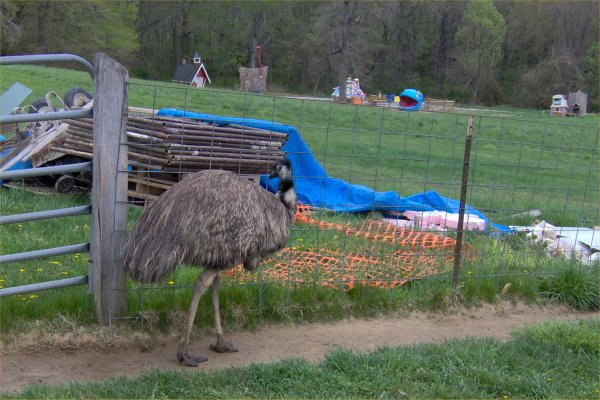
Here is a photo from a local farm on 4/26/07 of an emu:
Emu
Guinea fowl are from Africa. They are like African chickens. The males are rather loud and are sometimes used as "guard dogs." The females are guinea hens but often, the entire species is called guinea hens. They come in a wide variety of colors now that are very beautiful. Guineas are often added to a yard to eat insects and arachnids such as ticks. Baby guinea fowl are called keets.
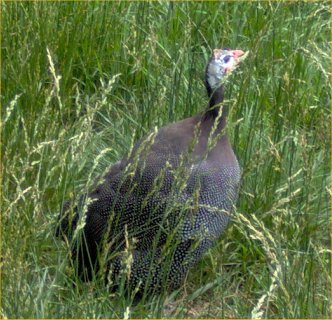
Here is a photo I took at the zoo
on 6/7/06 of a standard colored guinea fowl.
Guinea fowl
The Feather Site - guinea fowl page. It includes tons of photos!
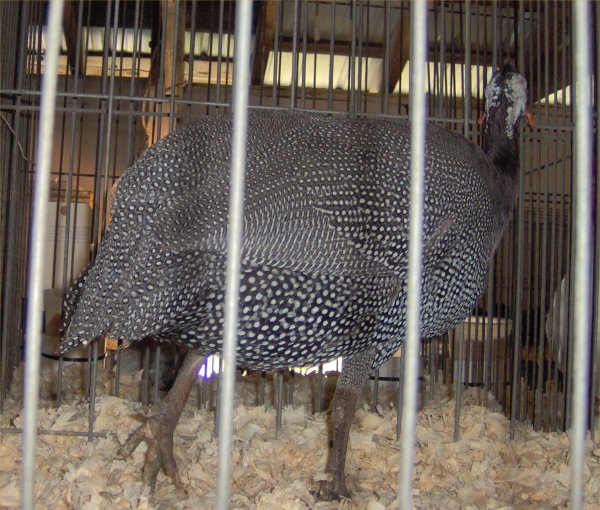
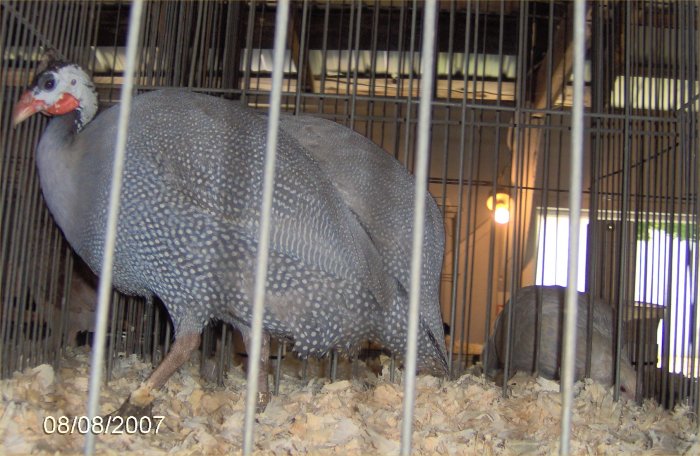
I took these two photos on 8/8/07 at our local fair in a cage:
One Guinea Fowl - rear view
Two Guinea Fowl - side view. There is a
chicken in the back right of the photo too.
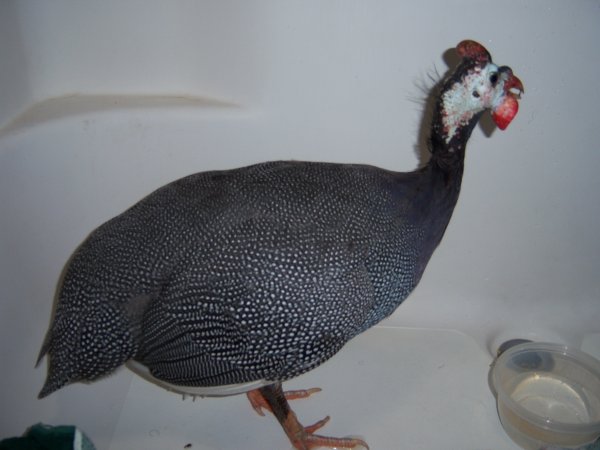
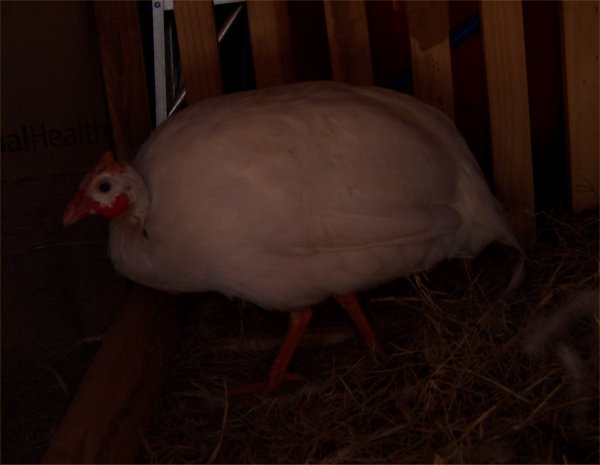
Crystal sent these photos on 2/1/08 of her guinea fowl. They had been sold to her as
"turkeys!":
Standard guinea fowl - named Mr. T
White guinea fowl - named Hoss
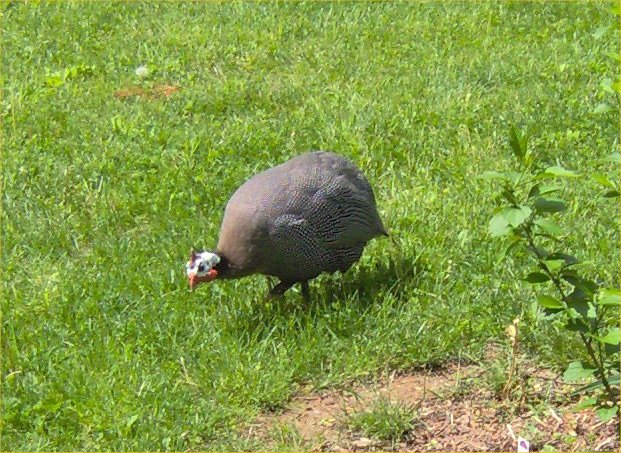
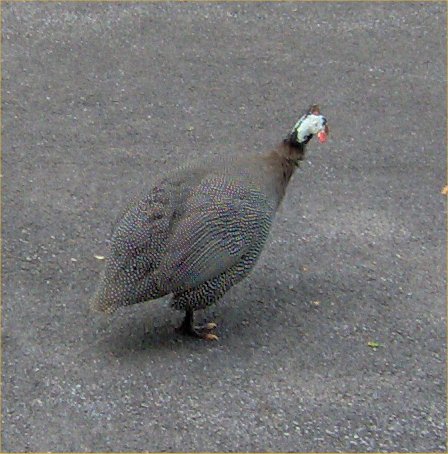
My mother took these photos of a guinea fowl when she was on a home showcase tour on
5/15/11:
Guinea fowl
Guinea fowl
Pheasants are mostly native to Europe and Asia. There are many gorgeous species of these medium-sized birds. The ring-necked pheasant is the one most commonly bought/sold in the USA as "game birds." They are released and then hunted. Wild populations have established themselves in parts of the United States.
Back in the last 1980's, we bought about a dozen baby pheasant. Three were a few days older and killed the rest. After we released them, we never saw them again.
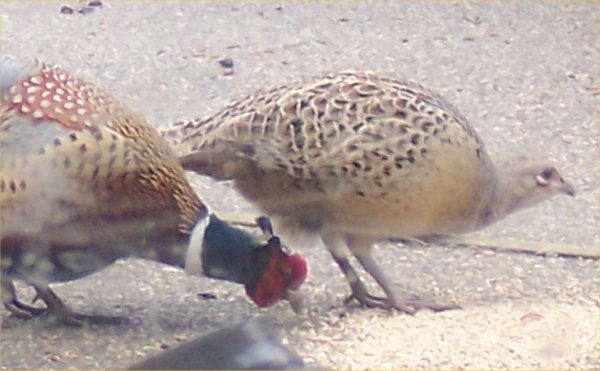
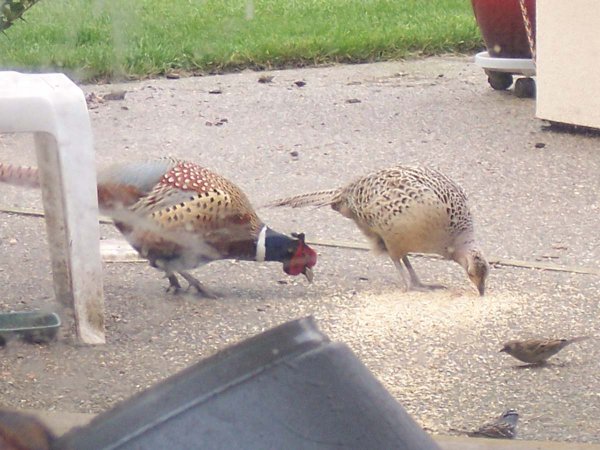
Laurie sent these photos of ringneck pheasants on 5/18/07:
Pair of ringneck pheasants - male on the
left
Pair of ringneck pheasants - male on the left,
close-up
Allandoo Pheasantry - some pretty pheasant photos, breeders in Scotland; link request
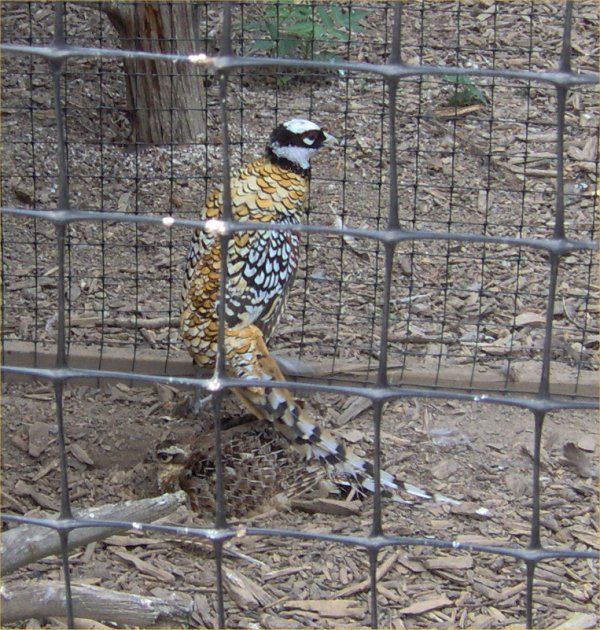
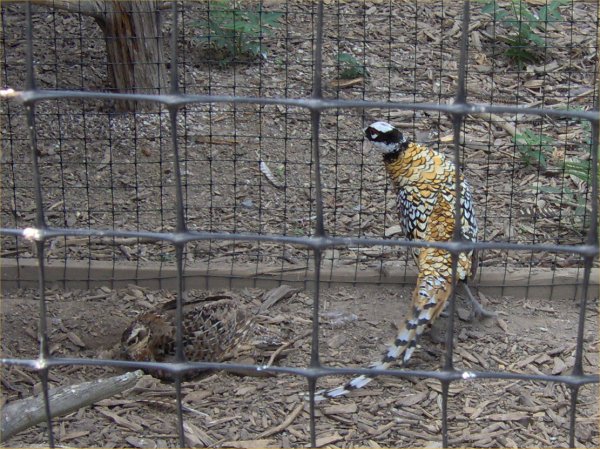
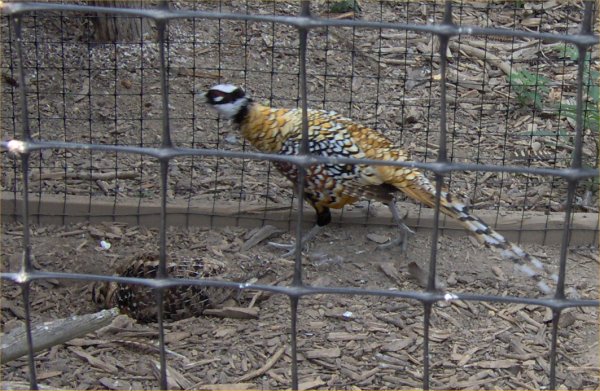
I took these photos of pheasants at Land of the
Little Horses on 7/29/07. I compared my photos to ones from The Feather Site so
hopefully I got the identifications correct.
Reeve's pheasants - male top, female
bottom
Reeve's pheasants - male right, female
left
Reeve's pheasants - male top, female bottom.
Are you getting the idea that I liked them!
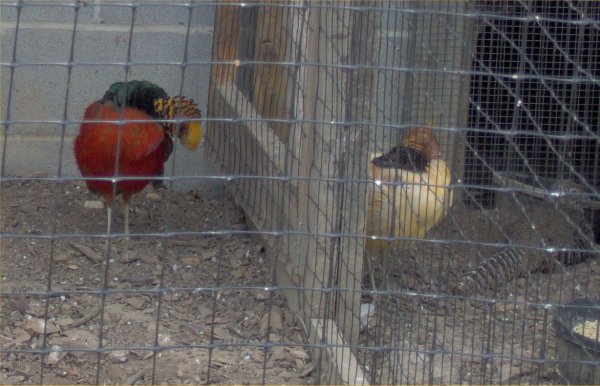
Golden pheasants - male left; male and
female to the right in another cage. I am the least sure about these identifications so feel free to
correct me.
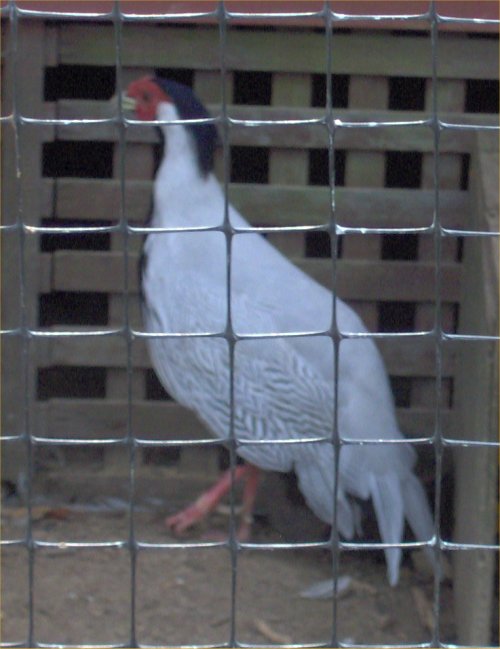
Silver pheasant - male
I took these photos at the National
Zoo on 9/14/07:
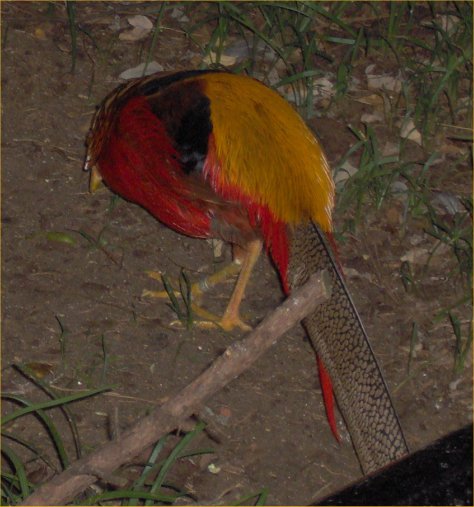
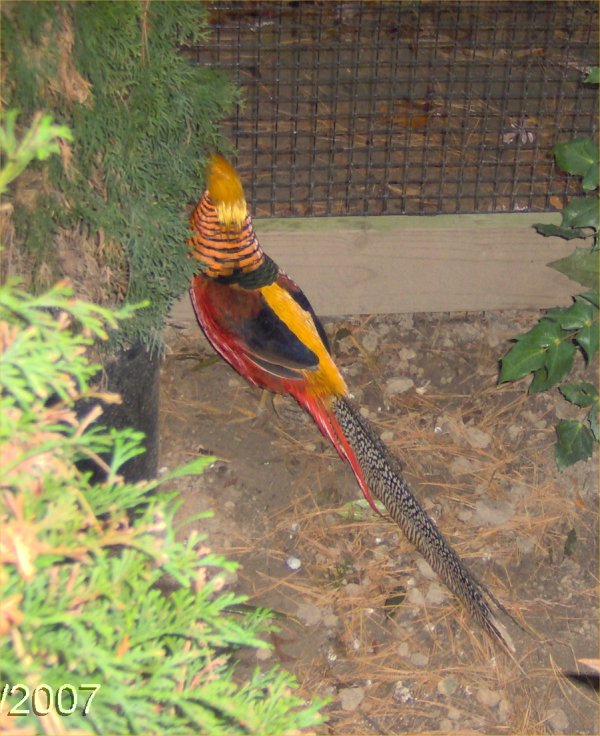
Male golden pheasant - gorgeous
too except I photographed his rump!
Pair of golden pheasants - this
time I got his front side. Can you find the female? He was protecting the females from us and
the peacocks.
On 11/9/07, we went to the Catoctin zoo. Here are two
pheasant photos from that page of photos:
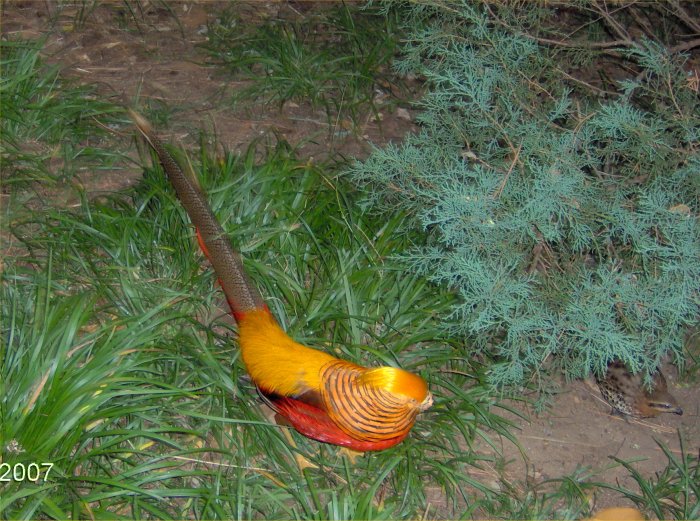
Male golden pheasant
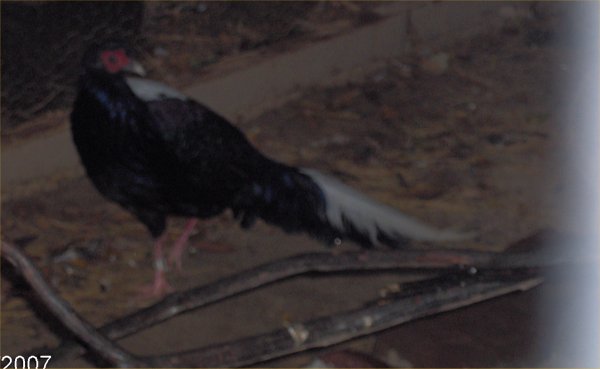
Male Swinhoe's
pheasant
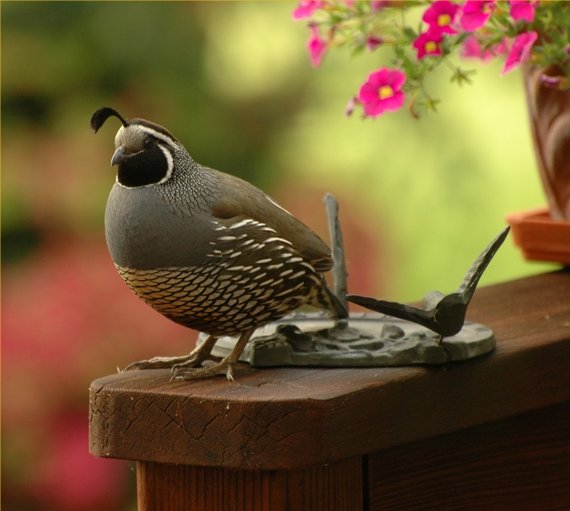
Quail are small, beautiful birds. The bobwhite quail and California quail are two species native to the United States. Button quail from Asia are often kept as pets. They are small and come in many colors. They are quite prolific breeders. In Europe, they like to eat quail.
Back in the late 1980's, twice we bought about a dozen quail. After a few weeks, we released them. When we moved to our land in 1977, we had the whistling male bobwhite quail around the property. By the time we released these batches, there were none around. After release, we never saw or heard any quail again. Quail prefer fields like we had in 1977 and not mature forest as we have today (2007).
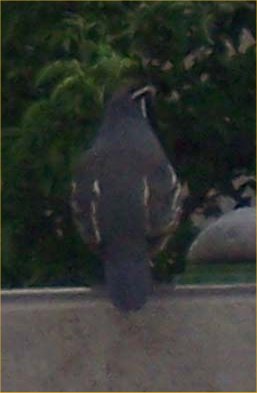
Laurie sent this photo of a California quail on 5/18/07:
California quail
|
|

|

|
E-mail RobynCopyright © 1997-2026 Robyn Rhudy |

|
 |